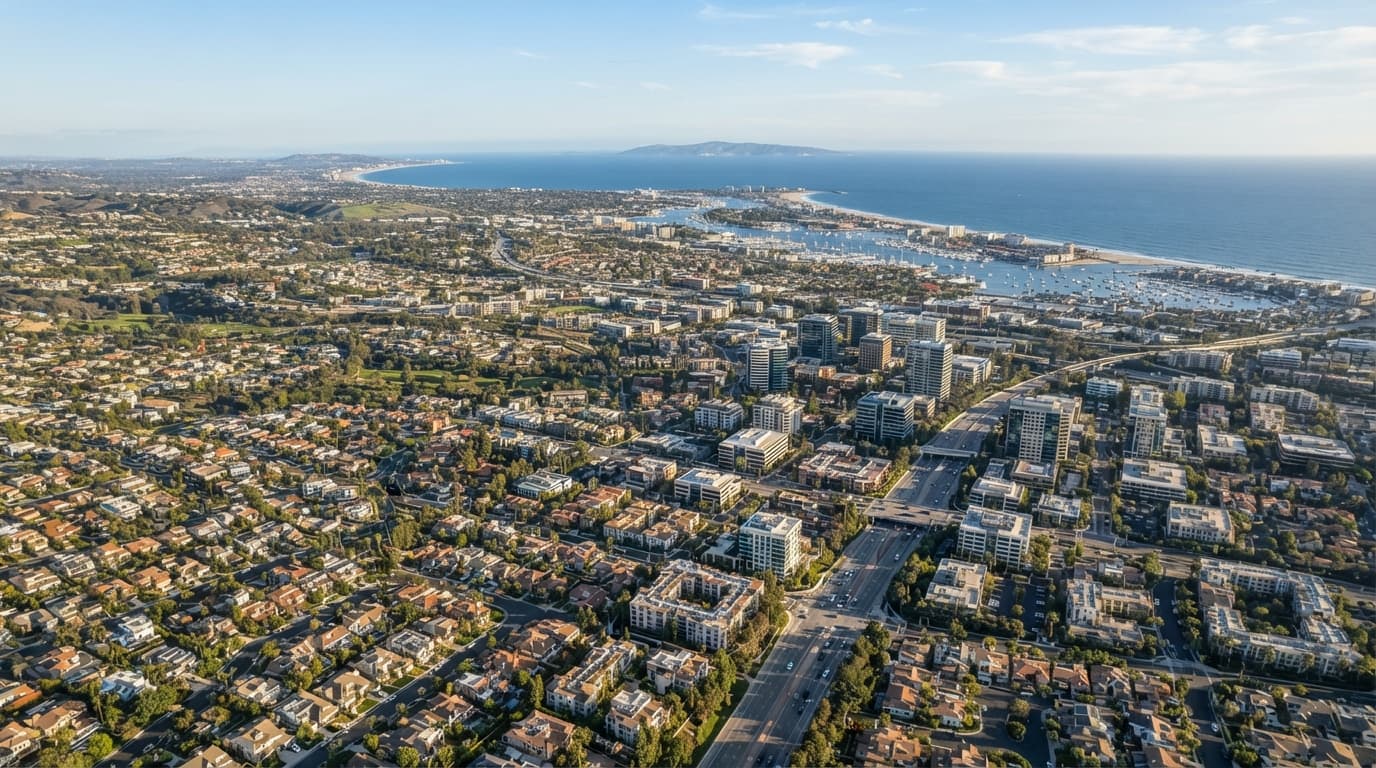
Macroeconomic Factors Shaping Orange County Real Estate
Interest rates, inventory, employment, and policy all influence Orange County home values. Here is how to read the big-picture forces without getting lost in headlines.
Orange County real estate does not exist in a vacuum. Even the most desirable neighborhoods respond to forces that start far from the coast: Federal Reserve policy, national employment trends, insurance markets, and the decisions of millions of homeowners who are weighing whether to stay put or move. Understanding these factors will not let anyone predict the market perfectly, but it will help you make decisions grounded in context rather than headlines.
Interest Rates and Borrowing Costs
Mortgage rates remain one of the most powerful influences on buyer behavior. When rates rise, monthly payments climb and some buyers pause or adjust their budgets. When rates ease, demand that was waiting on the sidelines can return quickly.
What matters for Orange County specifically:
- Many local purchases rely on jumbo financing, which can respond differently than conforming loans.
- A meaningful share of luxury buyers purchase with cash or significant equity, softening rate sensitivity at the top of the market.
- Rate expectations often move buyer sentiment before actual rates change.
The Lock-In Effect and Inventory
One of the defining features of the recent market has been limited resale inventory. Many Orange County homeowners hold low-rate mortgages and long-standing Prop 13 assessed values. Moving would mean giving up both, so many choose to stay.
This lock-in effect has several consequences:
- Fewer homes come to market, which supports prices even when demand softens.
- Well-prepared listings can stand out quickly in a thin field.
- Life events, such as relocation, downsizing, estate transitions, and family changes, become the primary drivers of new supply.
Employment and Regional Economy
Orange County benefits from a diverse economic base that includes healthcare, technology, education, tourism, and professional services. Employment centers in Irvine, Costa Mesa, and Newport Beach support steady housing demand. National economic slowdowns can still affect local hiring and confidence, but a diversified base tends to cushion the impact compared with single-industry regions.
Remote and hybrid work also continue to shape demand. Some buyers are willing to trade a longer occasional commute for more space, while others prioritize proximity to coastal amenities.
Insurance, Costs, and Policy
Ownership costs beyond the mortgage have become a larger part of the conversation. Homeowners insurance availability and pricing in California, HOA dues, and maintenance costs all factor into what buyers are willing to pay. Policy changes at the state and local level, including housing legislation and tax rules, can also influence supply and demand over time.
Buyers increasingly ask about these costs early, and sellers who provide clear information upfront tend to have smoother negotiations.
Capital Flows and Luxury Demand
At the high end, Orange County continues to draw buyers from other states and countries. Wealth effects from equity markets, business liquidity events, and relocation trends can influence luxury demand somewhat independently of local mortgage conditions. Coastal communities and guard-gated enclaves remain especially sensitive to these flows.
What This Means for Your Strategy
Macro conditions should inform your plan, not paralyze it:
- Sellers: focus on preparation, accurate pricing, and a clear process. In a low-inventory environment, a well-run sale can attract concentrated attention.
- Buyers: separate long-term goals from short-term rate noise, and be ready to act when the right property appears.
- Investors: stress-test assumptions against a range of rate and cost scenarios.
A structured, time-bound sale process can be particularly useful when conditions are uncertain, because it creates a defined window for buyers to act rather than leaving a listing exposed to shifting sentiment for months.
Key Takeaways
- Interest rates shape buyer budgets, though cash and equity-rich buyers soften the effect at the high end.
- The lock-in effect keeps resale inventory limited across much of Orange County.
- A diverse regional economy supports steady underlying demand.
- Insurance, HOA, and ownership costs increasingly influence buyer decisions.
- Clear preparation and a defined sale timeline help sellers navigate uncertainty.
For a deeper look at how these forces may play out in the year ahead, read our 2026 OC Market Forecast Blog and see what it could mean for your next move.
Articles inform the decision. A private consultation turns insight into a tailored strategy. See how Alex can help.